
Why KAP Surveys Matter for Public Health and Development Projects

January 11, 2026

Why KAP Surveys Matter for Public Health and Development Projects in Pakistan

Knowledge, Attitudes and Practices surveys are a standard research tool used by organizations working in health, social development and community based programming. In market research in Pakistan, KAP surveys play a critical role in helping governments, NGOs and donors understand how communities think and behave. Leading market research companies in Pakistan rely on KAP studies to generate evidence that guides effective interventions. When designed and implemented correctly, KAP surveys reduce guesswork and improve program relevance across Pakistan.

The role of KAP surveys in early planning

Public health and development projects in Pakistan often begin with limited or outdated secondary data. National statistics may not reflect local realities in districts such as Tharparkar, Swat or urban informal settlements in Karachi. KAP surveys fill this gap by providing primary data tailored to a specific population. As part of market research in Pakistan, they establish a baseline by identifying knowledge gaps, misconceptions, priorities and existing practices.

For example, a maternal health initiative in rural Punjab may assume low awareness of antenatal care. A locally conducted KAP survey might reveal that awareness is high, but distance to facilities and transport costs are the main barriers. This kind of insight, commonly generated by market research companies in Pakistan, leads to better planning and more efficient use of resources.

How KAP data strengthens project design

Many development programs fail because technical solutions do not align with community behavior. KAP surveys help project teams understand behavior patterns clearly. In Pakistan, this is particularly important due to cultural, linguistic and socioeconomic diversity across provinces.

If a nutrition program in Sindh finds that attitudes toward supplements are neutral but usage remains low, the issue may be access rather than awareness. If attitudes are negative, trust building becomes a priority. By separating knowledge, attitudes and practices, market research in Pakistan enables organizations to avoid unnecessary activities and focus on real barriers.

Monitoring change over the project lifecycle

KAP surveys are not limited to baseline studies. Repeated surveys help measure change over time and assess whether interventions are working. Development projects in Pakistan often operate in phases, making it essential to track progress with reliable data.

For instance, a water and sanitation project in Khyber Pakhtunkhwa may improve community knowledge about safe water handling. A follow up KAP survey could show that while knowledge increased, practices did not change due to limited access to clean water. This insight, commonly identified through market research companies in Pakistan, helps teams adjust strategies instead of repeating ineffective training.

Use of KAP surveys during emergencies

Emergencies such as floods, disease outbreaks and displacement rapidly change behavior. In Pakistan, where climate related disasters are frequent, assumptions based on pre crisis data can be misleading. KAP surveys provide a fast and structured way to capture updated information on risks, coping mechanisms and trusted communication channels.

During a dengue outbreak in Lahore, for example, a KAP survey can reveal whether households understand transmission routes, trust public health messaging and follow prevention guidelines. This type of market research in Pakistan supports timely decision making and targeted response planning.

Ensuring data quality through professional implementation

The value of a KAP survey depends on sound design and execution. Poorly worded questions or inconsistent fieldwork can compromise results. This is why many organizations partner with experienced market research companies in Pakistan that offer trained enumerators, proper sampling and quality control systems.

ACE Research supports KAP surveys through professional questionnaire design, technology enabled data collection and real time monitoring. Mobile data collection tools reduce manual errors and improve verification. For nationwide projects, consistent methodology across provinces allows accurate comparison of findings.

Strengthening stakeholder and donor communication

KAP findings are essential for communicating with donors, government bodies and partners. In Pakistan’s development sector, stakeholders expect evidence that programs are grounded in community realities. Baseline and endline KAP surveys generated through market research in Pakistan provide structured, measurable proof.

This data strengthens proposals, progress reports and policy recommendations. It also increases credibility by showing that decisions are based on field evidence rather than assumptions.

Supporting community engagement

Although KAP surveys are not participatory by design, they often improve community engagement. Asking households in areas like Balochistan or Gilgit Baltistan about daily practices uncovers insights that may not appear in formal consultations. This approach, widely used by market research companies in Pakistan, helps teams adapt messaging and respect local norms.

When communities see their experiences reflected in program design, trust and cooperation improve.

Planning for long term sustainability

Behavior change takes time. KAP surveys help organizations in Pakistan understand which changes are stable and which require ongoing support. This enables realistic timelines and sustainable strategies beyond short term project cycles.

As digital tools become more common, market research in Pakistan has made KAP surveys easier to repeat across project stages. ACE Research integrates data monitoring systems that allow teams to respond quickly as new patterns emerge.

Conclusion

KAP surveys provide structured, practical insight for public health and development projects in Pakistan. They inform planning, improve design, measure progress and strengthen stakeholder communication. When conducted by experienced market research companies in Pakistan, KAP surveys reduce uncertainty and increase the likelihood of project success. With professional support from platforms like ACE Research, organizations can ensure their data is reliable, timely and grounded in local context.


How Business Feasibility Helps When Entering a New Market in Pakistan

October 24, 2025

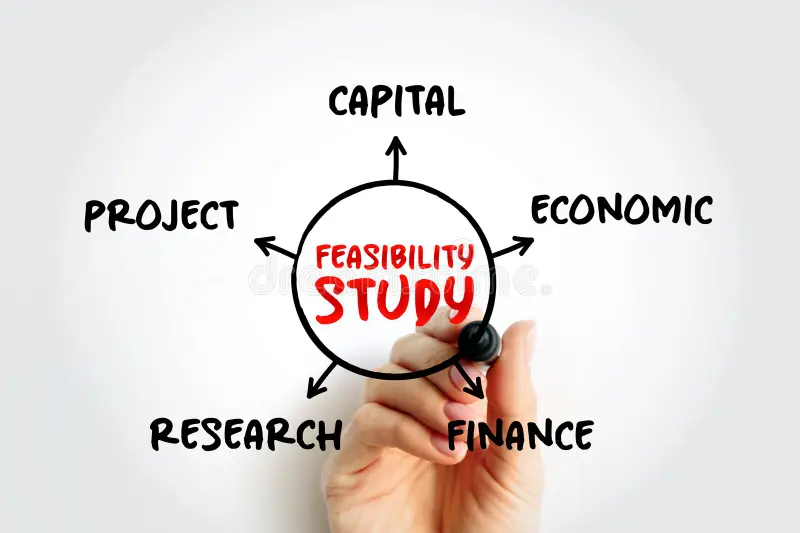
Starting a new business in a fresh market is exciting, but it can also be risky. A business feasibility study acts as a safety check before you make large investments. It helps answer the basic but critical question: “Is this idea workable in real life, in this market, at this current time?” For companies looking to set up in the Pakistani market, where opportunities are plentiful but challenges are equally present, feasibility studies are not just useful: they are imperative to the future of the company.

A feasibility study helps to reduce the uncertainty regarding whether or not the company will succeed, by investigating the market conditions, costs, risks, and possible returns, to report if the idea is worth pursuing. Without it, businesses are left to guesswork, and in Pakistan, where market conditions are largely unstable due to currency shifts, government policies, or supply chain issues, this guesswork can end up costing you more than you can afford. The beginning of any great idea lies in foresight and careful preparation.

Feasibility Studies in Pakistan’s Market

Pakistan has already shown both winners and losers when it comes to market entry. Daraz is one of the biggest e-commerce names here. It began as a local platform, understood the market well, and built strong logistics systems that could handle the realities of Pakistan’s roads, traffic, and consumer habits. Because of this adaptability, it caught the eye of global giant Alibaba, which acquired it in 2018. Daraz’s success demonstrates how important it is to study customer habits, city infrastructure, and payment systems before scaling up.

On the other hand, Careem, the ride-hailing app, announced in 2025 that it was shutting down its service in Pakistan. Despite being popular and well-known, it could not survive growing competition, rising costs, and tough economic conditions. This shows that even a strong product can fail if the wider market environment doesn’t support it.


Where to Begin?

A good feasibility study for Pakistan begins with understanding the market size and customer base. The country has over 240 million people, but not all of them are reachable or willing to spend on new products. Urban centers such as Karachi, Lahore, and Islamabad drive most of the demand, but spending power and digital access vary widely. For example, young professionals in Lahore may adopt online shopping quickly, while rural households often stick with traditional shops. Ignoring these differences can lead to wasted marketing budgets and disappointing sales.


Hiring a Market Research Firm

No matter the size of the product or service, businesses entering Pakistan must hire a market research firm to guide their entry. Professional firms bring structured research methods, verified data, and industry experience to reduce risk. At ACE Research, for example, we carry out both primary and secondary research, interview competitors, and cover every possible angle of feasibility—helping companies test assumptions before committing serious capital.


Defining Target Audience

One of the first steps in a feasibility study is narrowing down the target audience. Most companies start with larger cities like Karachi, Lahore, and Islamabad, but even within these markets, consumer demographics vary. Age, income, education, and digital familiarity all shape how people spend. A clear understanding of the target audience ensures that product design, branding, and pricing connect with the right segment.


Target Cities

Cities in Pakistan are not uniform markets. Karachi is large and diverse, Lahore has strong consumer culture, and Islamabad caters to professionals and policymakers. Beyond these, mid-sized cities such as Multan, Faisalabad, and Peshawar have untapped potential but require tailored strategies. Choosing the right launch city can determine whether a product gains traction or fades quietly.


Consumer Buying Power, Habits & Trends

Feasibility studies also analyze how people actually spend. Disposable incomes vary widely across Pakistan, and so do habits. Younger urban consumers may prioritize fashion, electronics, and dining, while rural customers lean toward essentials and traditional shopping. Trends such as increasing digital adoption or rising demand for convenience-driven services matter, but ignoring the limits of buying power can be fatal.


Retail/Distribution Network

For physical products, an effective retail and distribution network is the backbone of success. Through market surveys and local studies, feasibility research identifies how products reach customers today, which intermediaries dominate distribution, and where gaps exist. Without this groundwork, companies risk misjudging costs or failing to place products in front of buyers altogether.


Existing Players and Competition Study

Local competition is often underestimated by new entrants. A market that looks wide open may in reality be dominated by companies with strong networks, customer loyalty, or aggressive pricing strategies. A feasibility study maps out existing players and shows where opportunities exist—whether in direct competition, market gaps, or partnerships with established players.


Product Pricing and Branding

Pricing and branding decisions in Pakistan cannot be generic. Market surveys show what customers are willing to pay, how they perceive value, and what kind of brand messages resonate. Misjudging this balance can make a product seem overpriced or irrelevant. Feasibility work grounds branding and pricing in actual customer insight rather than assumptions.


Marketing Strategy and Milestone

A successful market entry doesn’t stop at launch. Feasibility research also informs marketing strategy: which channels to use, which milestones to set, and how to phase entry. Whether through digital campaigns, retail promotions, or city-by-city expansion, mapping a clear sequence of steps helps businesses grow sustainably instead of burning resources too quickly.


Rules and Regulations

Regulations and taxes form another key part of the feasibility process. Rules can differ across provinces, and sudden policy changes can disrupt even well-prepared businesses. Import duties, sales tax, and licensing requirements can quietly eat into profits. Companies often face delays in securing approvals, so factoring in extra time and costs for compliance is a must. Without that preparation, businesses may find their launch stuck in bureaucratic slow lanes.


Financial Matters

Currency risk is also central to feasibility in Pakistan. The Pakistani rupee has been volatile in recent years, and foreign investors especially must prepare for exchange rate fluctuations. Even local companies feel the pinch when the currency weakens, as it drives up the cost of imported goods, raw materials, or technology. Feasibility studies test how sensitive business plans are to such changes. A model that looks profitable under one exchange rate may look very different when the rupee drops.

Payments and consumer behavior must also be carefully studied. While digital wallets and bank cards are growing, cash-on-delivery remains the dominant mode of payment for many households. If a business relies only on online payments, it risks excluding a large part of the market. At the same time, cash-on-delivery creates its own risks of fraud and product returns. A feasibility study helps balance these trade-offs and design payment strategies that match real consumer habits.


Other Factors

Logistics is another major challenge. Getting goods to customers is rarely straightforward. Roads can be congested or damaged, fuel shortages create bottlenecks, and seasonal floods disrupt supply chains. Delivery costs and times are often higher than initial plans assume. Businesses like Daraz only succeeded because they invested heavily in delivery networks, warehouses, and reliable local partners. Any feasibility assessment that overlooks these ground realities is incomplete.

Competition and partnerships are equally important. A market may look wide open on paper, but in practice, local players may already dominate through better distribution networks, lower prices, or strong brand loyalty. Partnering with a local business can help new entrants navigate cultural differences, regulations, and supply chains.

A feasibility study also emphasizes the importance of testing before scaling. Launching nationwide on day one is almost always a mistake. In Pakistan, where each city can feel like a separate market, running a pilot project in one location for three to six months is a safer route. This allows businesses to test customer interest, delivery times, and financial performance in a controlled way. Only once these numbers make sense should companies think about expanding further.

The financial side of feasibility ties everything together. A strong feasibility study builds a detailed financial model showing the best-case, worst-case, and most likely scenarios. This model helps decision-makers understand how much money is required, how long it might take to break even, and what risks could derail the plan. When presented clearly, these findings help attract investors, reassure managers, and provide direction to staff.


Conclusion

Pakistan is a market with huge potential, thanks to its young population and fast-growing digital economy. But it is also a market where businesses can burn through capital quickly if they are not careful. A feasibility study helps turn uncertainty into a plan by providing clarity about customers, competition, costs, and risks. The success of Daraz and the exit of Careem both show that feasibility is not just theory: it is the difference between survival and collapse.

By approaching the market systematically, companies can give themselves a better chance of success. In Pakistan, that means doing the groundwork: understanding the customer, testing the operations, planning for regulation, and preparing for financial ups and downs. A business feasibility study turns this complexity into a clear guide, giving businesses the confidence to decide whether to dive in, wait, or walk away.

At ACE Research, we specialize in helping businesses through this exact process. From defining audiences and surveying buying power, to mapping competition, testing branding, and creating robust financial models, we cover every corner of feasibility to give companies clarity and confidence as they step into Pakistan’s challenging but rewarding market.